
A/C Switches & Sensors
Switches are typically binary devices that open or close a circuit based on a specific condition.
Switches in an Automotive A/C System
-
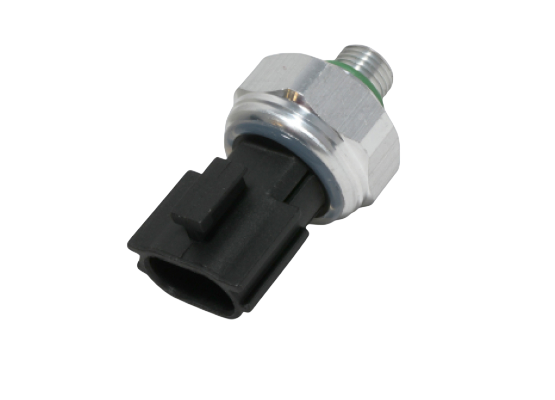
A/C Pressure Switches (High & Low Pressure)
Located on the refrigerant lines near the compressor or accumulator/receiver-drier, these are
critical safety devices that protect the system from extreme pressures.
High-Pressure Switch: Opens the compressor clutch circuit if high-side pressure becomes dangerously elevated, preventing damage to the compressor, condenser, and related components. May also trigger the condenser fan to maximum speed.
Low-Pressure Switch: Opens the compressor clutch circuit when low-side pressure drops too low, protecting against lubrication failure and preventing evaporator freeze-up. On orifice tube systems, it cycles the compressor to maintain evaporator temperature. - Compressor Clutch Relay / Switch Typically located in the fuse box or under the hood near the compressor. This electromagnetic switch receives a signal from the A/C control module (or directly from pressure switches) to engage or disengage the compressor clutch, connecting it to the engine's accessory drive belt to pump refrigerant.
-
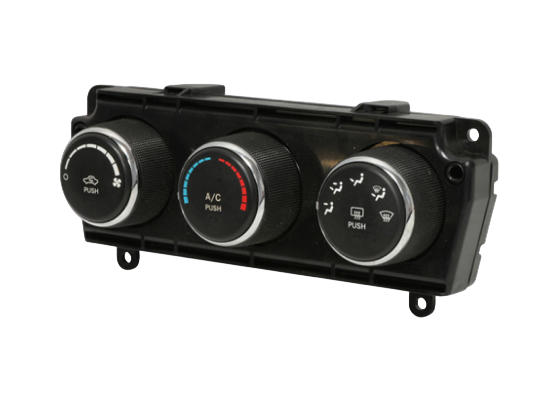
Blower Motor Speed Switch / Resistor
The speed switch is located on the climate control panel; the resistor is typically in the
passenger footwell or under the dashboard near the blower motor.
Speed Switch: Allows the user to select desired cabin fan speed.
Resistor: Reduces electrical current to achieve lower fan speeds. At maximum speed, the resistor is bypassed for full voltage. Modern vehicles often use a blower motor control module for precise variable-speed control.
Sensors in an Automotive A/C System
Sensors provide variable electrical signals that the vehicle's control unit (HVAC control module or ECM/PCM) interprets to make precise adjustments.
- A/C Refrigerant Pressure Sensor (Transducer) Found on the high-pressure refrigerant line, this transducer delivers a continuous variable signal — unlike a simple on/off switch. This enables precise control of the compressor, condenser fan speed, and overall system operation, optimizing performance and efficiency across all operating conditions.
- Evaporator Temperature Sensor (Thermistor) Mounted directly on or near the evaporator core inside the HVAC housing. Measures evaporator coil temperature to prevent freeze-up — if the core approaches 32°F (0°C), the control module cycles the compressor or adjusts output to keep airflow clear and maintain cooling efficiency.
- Ambient Air Temperature Sensor Located outside the cabin — typically behind the front bumper, in the grille area, or in a side mirror. Measures outside air temperature so the automatic climate control system can anticipate the required heating or cooling load. This reading is also commonly displayed on the instrument cluster.
- In-Car Temperature Sensor (Cabin Temperature Sensor) Located inside the passenger compartment — often in a grille on the dashboard, overhead console, or climate control panel. Some systems feature multiple zone sensors. Continuously feeds cabin temperature data to the control module, which adjusts blower speed, blend door positions, and compressor operation to maintain the occupant's target temperature.
- Sun Load Sensor (Solar Sensor) Typically mounted on top of the dashboard under the windshield, appearing as a small dome or knob. Detects the intensity and angle of sunlight entering the cabin — solar load can significantly raise perceived temperature. The climate control system compensates by increasing cooling to sun-exposed areas, maintaining consistent comfort for all occupants.
- Blower Motor Speed Sensor (Hall Effect Sensor) Integrated within the blower motor assembly on advanced automatic climate control systems. Verifies actual motor RPM via Hall effect feedback, allowing the control module to precisely regulate airflow speed, confirm commanded speeds are achieved, and detect motor malfunctions before they impact comfort.
Working together, these switches and sensors allow the automotive A/C system to efficiently cool the cabin, prevent system damage, and deliver optimal comfort — in every condition, for every occupant.